Treaties |
||
As the population increased, more land was needed and having the land already occupied was causing problems. The solution was to relocate the tribes onto new lands in the North West in exchange for goods, monetary or otherwise, and an annual payment. Several meetings between the United States and Native Americans occurred before a consent was made, such as, Chickasaw Treaty 1805, Treaty With the Chickasaw 1816, "Secret" Journal on Negotiations of the Chickasaw Treaty of 1818, Treaty With the Chickasaw 1818 and much more. 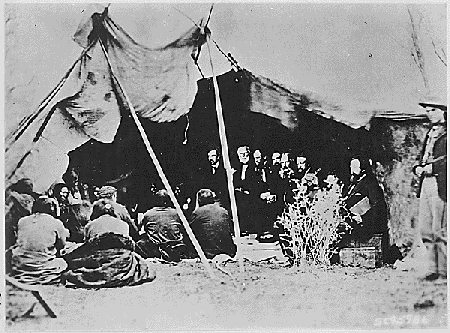 A treaty between the Sioux and Americans at Fort Laramie, Wyoming On July 9, 1821 the president could now appoint a "commissioner of Indian affairs" to work underneath the secretary of war. From 1814 to 1824, Andrew Jackson was a military leader that had already defeated a part of the Creek nation and was involved in nine of the eleven treaties to move southern and eastern tribes west. He used his military experience as a platform to run for president and in 1829 he succeeds and became the seventh president of the US. |
Under President Andrew Jackson, designated that each tribe was its own nation and could be treated as such. This meaning they were treated as a separate identity and could be moved if both sides consented. Over 94 treaties were made, though there were no restrictions or inquiries over the conditions the treaties were made. Recognition of the tribes as separate nations ended when Indian Appropriations Act of 3 March 1871 saying each nation was part of the US. No treaty was nullified but throughout the process, negotiation faltered and force was used. |
|
Make a Free Website with Yola.
